


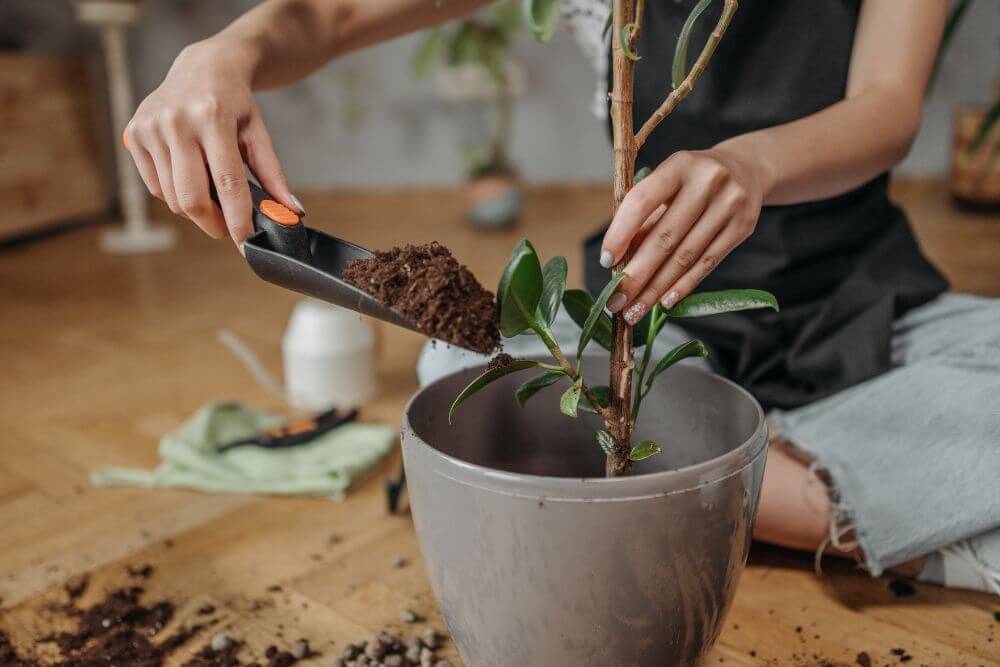
Some green thumbs sing to their plants to get them to grow; others may give them endearing pet names or even try to summon their inner chlorokinesis (the supernatural ability to physically or mentally manipulate natural vegetation). At Sprocket Roasters, however, we prefer to stick to the facts.
That's why we use spent coffee grounds from our morning brew to help our plants thrive. The benefits of using coffee grounds for garden beds, lawns and potted plants are well documented; they are a versatile and sustainable coffee ground fertiliser rich in nitrogen and other nutrients, useful for improving soil structure, deterring pests and encouraging plant growth. (That being said, incorporating the occasional backyard ballad into our gardening routine can't hurt – Clapton's "Let It Grow", perhaps?) The Beatles' "Octopus's Garden"?
While coffee grinds are good for your soil and your plants (we will go into a bit more detail about that shortly), this may not apply to seedlings, which are fragile and not yet ready for the nutrient shock that coffee grounds may deliver. It's important to use coffee grounds in moderation and mix them with other organic materials to avoid potential issues such as acidity imbalance or excessive nitrogen levels. Additionally, some plants may be more sensitive to coffee grounds, so it's advisable to research specific plant requirements before using coffee grounds as a fertiliser.
Besides the chlorokinesis thing, there is also one other myth you should disregard. Even though coffee grounds are mildly acidic, they do not unblock drains, as some people may believe. In reality, they will probably clog your drains. On the bright side, coffee grounds are good for your skin (which may be helpful if your green thumbs are destroyed following any extended gardening – or drain unblocking – sessions). Just mix the grounds with a little honey or coconut oil and rub on for some restorative, exfoliating action.
1. Adding Coffee Grounds to Your Compost
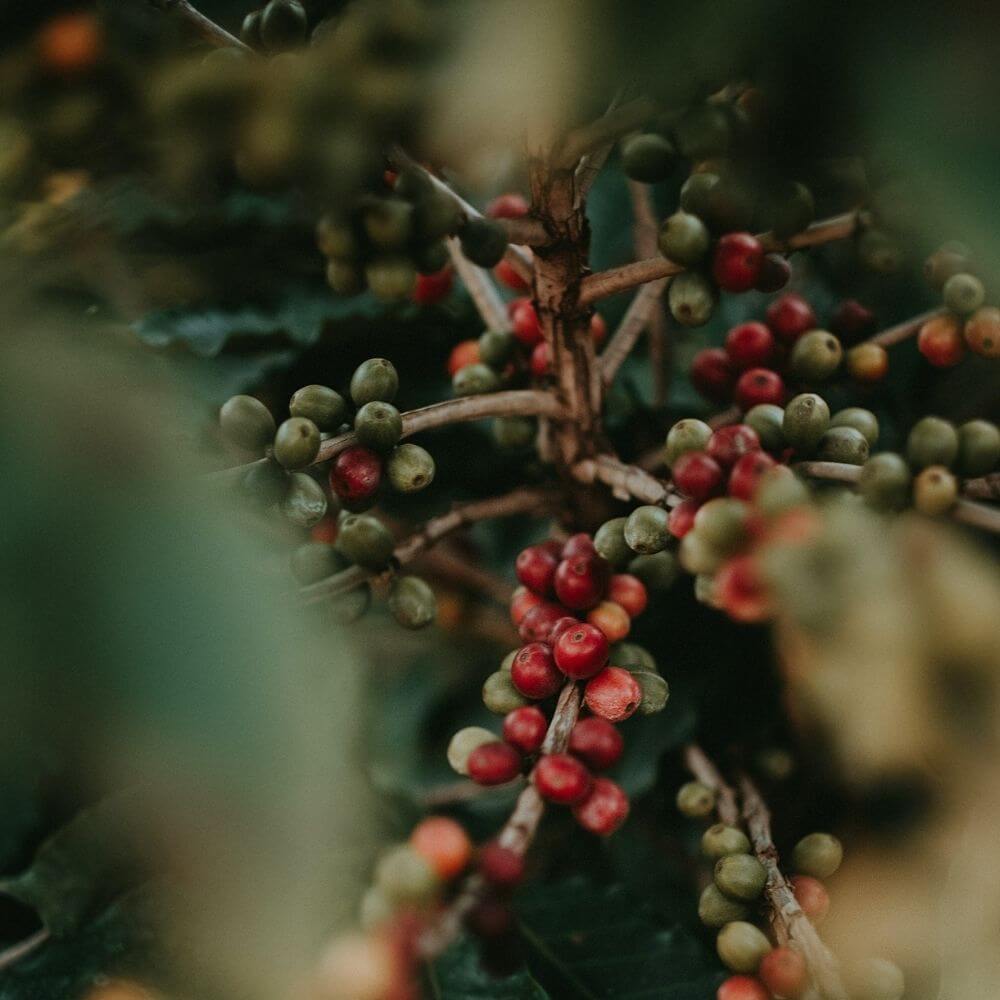
Coffee grounds are organic because they are the used ground beans (waste) that remain after the coffee-making process. Coffee beans themselves are not actually beans (they just look like beans), but the fruit or pip of cherries that grow on the Coffea plant. This makes coffee grounds for garden compost an outstanding choice – along with tea leaves, they help break down other organic matter and add micronutrients to the soil like calcium, magnesium, boron, copper, iron and zinc.
For those of us who like a bit more detail, compost is simply decayed organic material used as a fertiliser and conditioner of the soil. It introduces microorganisms that aid soil aggregation (which is how primary soil particles like sand and silt bind around organic matter). The microorganisms secrete microbial glues, which help bind the soil and can improve the drainage of your soil (not your drains)—hence the point about coffee grinds helping with soil structure.
How: Add coffee grounds to your compost pile in layers. Be sure to mix them with other organic matter, such as leaves, grass clippings, and food scraps.
2. Using Coffee Grounds as Mulch
Coffee grounds also make good mulch (along with decaying leaves, bark and compost) that can be scattered around your plants to help control weeds, stabilise the soil and retain moisture. Mulch also provides good insulation for the plant, which can be useful in autumn and spring—both seasons are also the best times to spread mulch around your garden.
One practical tip when using coffee grounds for garden mulch is to avoid applying them in thick layers. A dense layer of coffee grounds can compact over time, forming a barrier that repels water rather than retaining it. A thin layer of no more than one centimetre, mixed with coarser organic material like bark chips or straw, gives you the moisture-retention and weed-suppression benefits without the risk of waterlogging your soil.
How: Sprinkle coffee grounds around plants as mulch. You can also mix them into the soil before planting.
3. How to Use Coffee Grounds as Fertiliser
It's easy to get confused between fertiliser and compost. Fortunately, the difference isn't very complex.
Fertilisers (such as coffee grounds, manure and ground bones) deliver nutrients to the soil, while compost nourishes it. Fertilisers, however, need to be applied sparingly because they feed the plants directly as opposed to compost, which feeds the soil. If you are wondering which plants like coffee grounds, acid-loving varieties respond best, including blueberries, cranberries, rhododendrons, hydrangeas and magnolias.
Tomatoes also benefit from a light application around the base; coffee grounds are good for tomato plants when used sparingly, once every few weeks.
How: Add coffee grounds to the soil around plants. You can also mix them into compost tea.
4. Using Coffee Grounds as a Natural Pest Deterrent
Have you had your morning caffeine fix but are still feeling a bit … sluggish? Try scattering your coffee grounds around plants or mixing them into the soil to drive away slugs, snails and even ants.
Pests don't respond well to coffee grounds because they contain compounds like diterpenes and caffeine, which mask the scents that attract pests (coffee grounds have a strong aroma, but this is made even stronger by roasting). Fun fact: both compounds can also act as natural insecticides, as the United States Environmental Protection Agency noted.
How: Sprinkle coffee grounds around plants to deter pests. You can also mix them into the soil.
Note: Be careful not to use grinds in any garden area where the family pet may inadvertently come into contact with and consume them; coffee can be toxic to some animals.
5. Feeding Coffee Grounds to Your Worm Bin
Peered into a worm bin recently? While not for the squeamish, we have yet to meet a gardener who doesn't love a good worm bin. You'll be pleased to know that worms love coffee, specifically coffee grounds and paper coffee filters, which their digestive systems break down into compost.
Overall, earthworms increase nutrient levels in the soil, improve drainage and are good for stabilising soil structure. Worms also distribute nutrients, decomposing matter, and micro-organisms throughout the soil.
Coffee grounds are good for your worms, and your worms are good for your garden. Take a spin around the humble worm bin, and your garden will reap the benefits!
How: Add coffee grounds to your worm bin in small amounts. Be sure to mix them with other organic matter, such as shredded paper and vegetable scraps.
6. Coffee Grounds for Indoor Plants - A Simple DIY Fertiliser Recipe
Using coffee grounds for indoor plants is simpler than you might think, and you can make your own fertiliser mixture at home. One recipe suggests adding the grounds to a container, mixing in one teaspoon of cinnamon, diluting with club soda, and applying once every few weeks. You may substitute the club soda with sparkling water, tonic water or carbonated soda. Singing to your plants for that extra special touch remains entirely optional.
Not every indoor plant will welcome coffee ground indoor plant applications equally. Ferns, peace lilies, pothos and African violets all tolerate slightly acidic conditions well and tend to respond positively. Succulents, snake plants and cacti, on the other hand, prefer neutral to alkaline soil and are better left without. If you are unsure, start with a very diluted mixture and observe your plant over two to three weeks before applying more regularly.
7. How to Make Compost Tea With Coffee Grounds
Ensure the coffee grounds in the garden are fresh because they will begin to lose their nutrients after a few days. Also, make a point of diluting the grounds in water like a weak coffee or tea to help reduce some of the impact of adding too much acidity to the soil. Compost tea is made by adding coffee grounds to a bucket of water and leaving it to steep for a few days; you will find that compost tea is good for your lawns, too.
To get the most from your compost tea, aim for a ratio of roughly one part coffee grounds to five parts water and allow it to steep for 24 to 48 hours rather than several days. Steeping for too long can encourage mould growth, which you want to avoid. Once ready, apply the tea directly to the soil around your plants rather than onto the leaves. You can use it on both garden beds and indoor pots, making it one of the most versatile coffee grounds for garden-use applications in this guide.
8. Which Plants Like Coffee Grounds?
Not all plants respond the same way to coffee grounds, so knowing which plants like coffee grounds before you start scattering your spent grinds is worthwhile. Acid-loving plants benefit the most; think blueberries, cranberries, rhododendrons, hydrangeas, gardenias and magnolias.
Do gardenias like coffee grounds? Yes, they thrive with a light application because they prefer slightly acidic soil, and coffee grounds support that naturally. Roses, azaleas and camellias are also good candidates. Avoid using coffee grounds around lavender, geraniums, tomatoes in excess, or any seedlings, as the nitrogen concentration can be too intense for young or alkaline-preferring plants.
9. Coffee Grounds for Garden Use - The Environmentalist's Way
Recycling your coffee grounds in your garden should be an environmentalist's first choice because it keeps organic matter out of landfills, thereby reducing your contribution to greenhouse gas and contributing to the circular economy.
This is where Sprocket Roasters coffee comes into its own. If you are a coffee enthusiast who cares about the environment and wants to ensure we leave the earth as healthy and vibrant as possible, consider Sprocket’s coffee.
The reason is simple. Sprocket Roasters has developed the most environmentally innovative coffee roasting process in Australia. By purchasing from us, you’re getting high-quality beans and a coffee product that has been roasted sustainably. Fist pump for both your morning brew and Mother Earth!
Our innovative fluid bed technology contributes to the circular economy by using coffee grounds and other bioenergy for fuel (not fossil fuels); this keeps additional organic materials out of landfills. Even the coffee husks are used as fuel; emissions are negligible due to complete combustion of the biomass. Another bonus? A high degree of control and accuracy is inbuilt into Sprocket’s roasting process, ensuring you can count on the same consistent cupful of flavour every single time.
Try a bag of Sprocket’s coffee; after you’ve enjoyed your morning brew, you can take your spent grounds (and compostable bag) out to the garden or worm farm. You’ll also contribute to the circular economy by utilising this nutrient-rich by-product on your plants. After all, as Paul Kelly has sung (possibly to his plants), “From Little Things Big Things Grow".
Frequently Asked Questions
Q. Are coffee grounds good for plants in the garden?
A: Yes - coffee grounds are good for plants and the garden when used correctly. They add nitrogen, calcium, magnesium and other micronutrients to the soil, improve drainage and soil structure, and act as a natural pest deterrent against slugs and snails. The key is moderation – mix them with other organic matter rather than applying a thick layer directly onto soil.
Q. Which plants like coffee grounds the most?
A: Acid-loving plants respond best. The plants that like coffee grounds most include blueberries, cranberries, rhododendrons, hydrangeas, gardenias, roses, azaleas and magnolia. These species prefer slightly acidic soil conditions, which coffee grounds support naturally. Avoid using them around lavender, geraniums and seedlings.
Q. Do gardenias like coffee grounds?
A: Yes, gardenias like coffee grounds because they are acid-loving shrubs that thrive in slightly acidic soil. A light application of coffee grounds around the base of a gardenia every few weeks can help maintain the soil pH they prefer. Avoid overdoing it, as too much nitrogen can affect flowering.
Q. Are coffee grounds good for tomato plants?
A: Used sparingly, coffee grounds are good for tomato plants. Tomatoes benefit from the nitrogen boost and the pest-deterrent properties. Apply a thin layer around the base of the plant every few weeks rather than digging it directly into the soil, and always mix it with compost or other organic matter to avoid acidity build-up.
Q. How do you use coffee grounds as fertiliser for indoor plants?
A: To use coffee grounds for indoor plants, add a small amount of used grounds to a container, mix in a teaspoon of cinnamon, dilute with sparkling water or club soda, and apply to your plants once every few weeks. This works well for indoor plants like ferns, peace lilies and pothos that prefer slightly acidic conditions. Always dilute concentrated grounds applied directly to potting mix, or they can raise acidity too quickly.